Whether you are a client, coach, or both, you have likely observed the GROW model in process. The GROW model is one of the most widely used in coaching, and truthfully, once you understand it, you start noticing it everywhere. It shows up in business meetings, therapy conversations, even in communication from a good manager addressing their team.
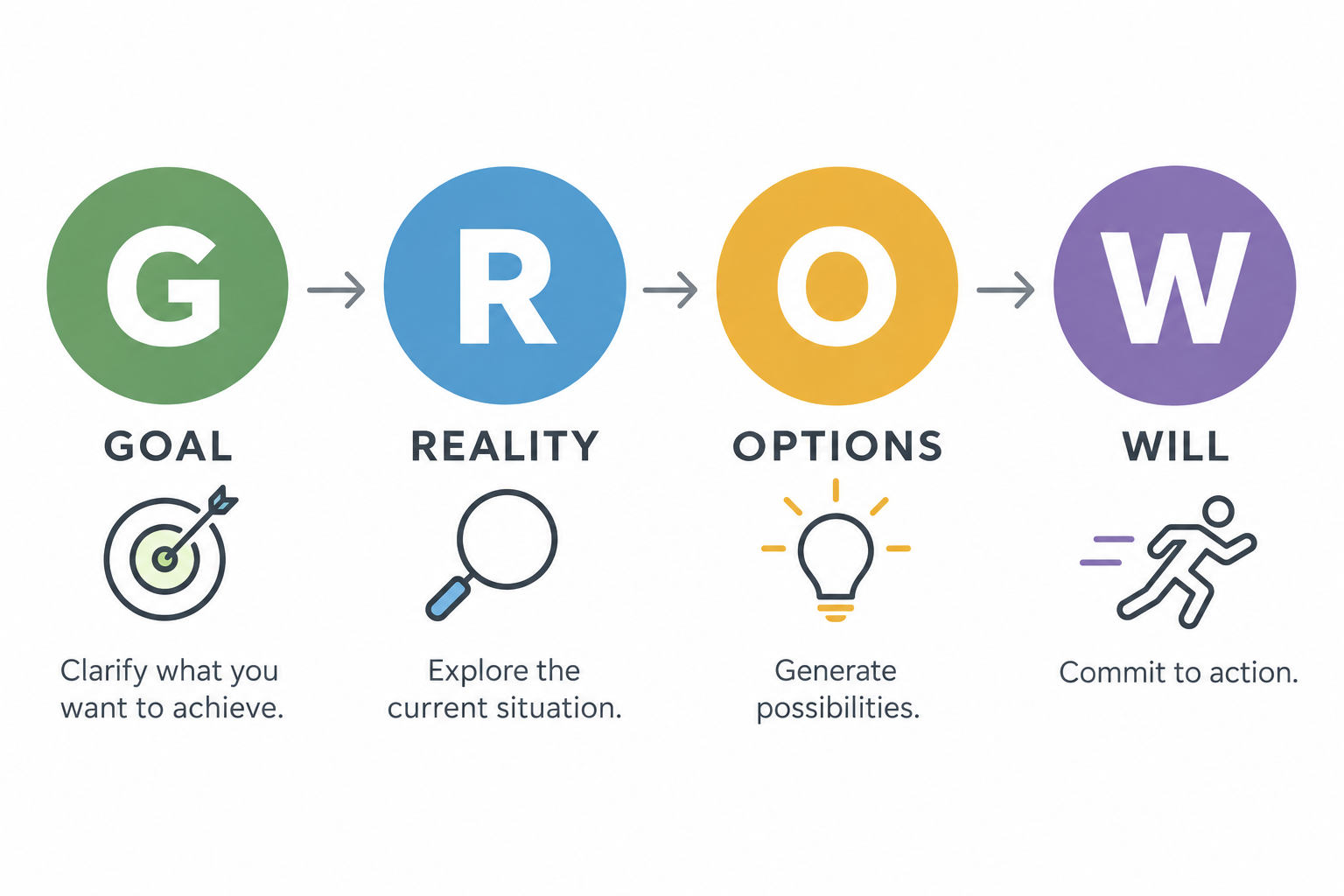
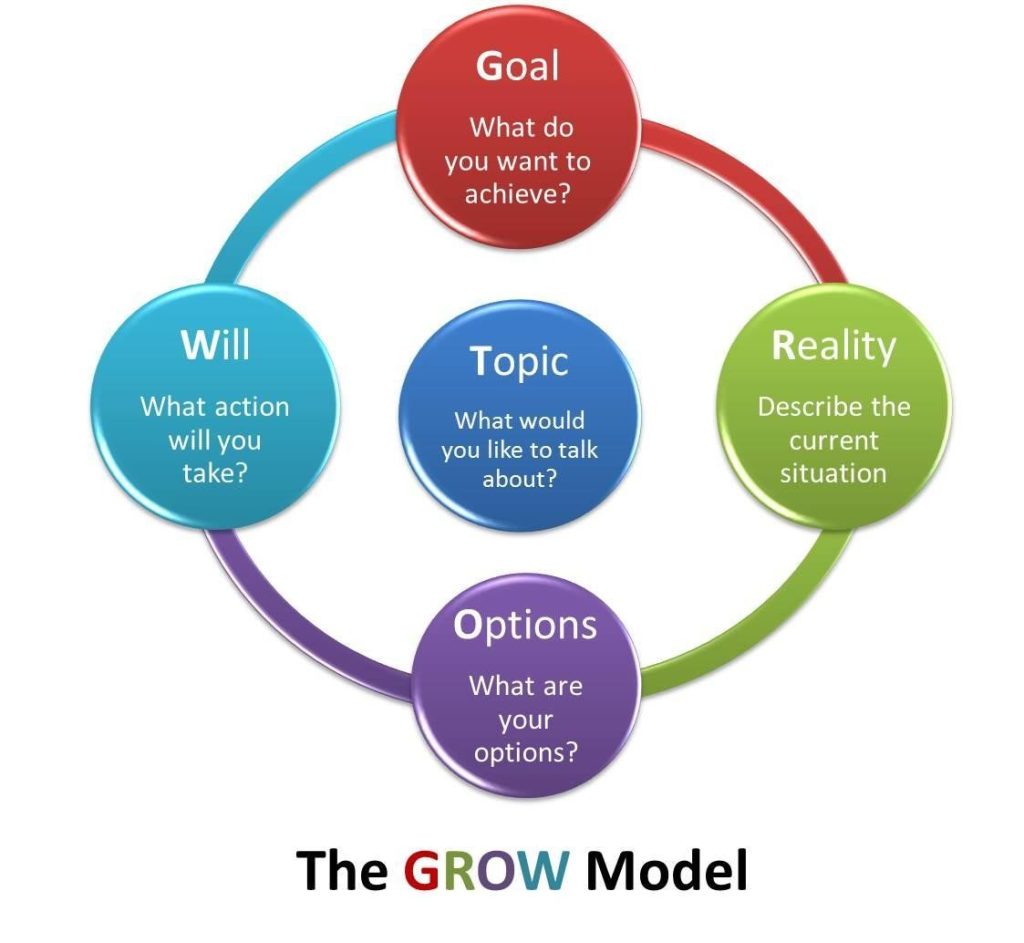
GROW is an acronym that stands for Goal, Reality, Options, and Will. Corporate and executive coaches in the UK developed the model in the 1980s, and its inception is largely credited to Sir John Whitmore, Graham Alexander, and Alan Fine. The model wasn’t designed to be an abstract theory, but rather a repeatable structure that life coaches could use in client conversations, regardless of the session time frame. The GROW method is designed to work in brief conversations or full-hour sessions.
The GROW Model in Practice
Goal is where every coaching conversation should start. Instead of asking what is wrong or what happened, coaches inquire what their client actually wants. Although this may seem obvious, it is surprising how many people enter into coaching without clear goals, and coaches help them get there. Clients show up and know they are unhappy or stuck, but they can’t articulate what their version of “better” would actually look like. A coach using GROW will spend real time here. A significant part of successful coaching is asking the right questions, including what success looks like for them and how they can measure forward movements toward that goal. Goals must be specific and measurable so that clients and coaches can measure and assess progress.
Reality is the second step in the GROW model. At this critical stage, coaches and clients must have candid, honest conversations. This stage is about looking at where the client is, and where they want to be. What resources do they have? What’s already been tried? What obstacles are actually in the way, versus which ones are assumed or feared. A lot of coaches will say this is the stage that takes the longest, because people tend to either minimize their situation or catastrophize it, and getting an accurate picture takes some digging.
Options is the stage of the model where coaches find they help clients reach breakthroughs. This is a time when coaches drive conversations to guide clients and get them on track to achieve their goals. Once everything is out in the open, coaches can ask questions that shift thinking to what clients can do to move things forward and address potential pitfalls. Skilled coaches masterfully push clients to come up with more options than they feel comfortable with. This push helps clients realize that what feels unrealistic may be a workable idea. It isn’t about picking a plan or implementing the first idea that pops into the client’s mind. Instead, this stage moves beyond adopting the initial ideas, which are often safe and less beneficial for the client.
Will (or Way Forward) is where it all comes together into action. This is the commitment stage. Coaches ask clients which option they plan to pursue and what their first steps are. This stage requires trust and accountability, which is where the real magic happens. Clients set goals with timelines at this stage and explore potential hurdles that may arise. Coaches ask clients to rate their commitment to the change because vague commitment rarely yields noticeable results. Vague commitments yield vague results.
What makes GROW useful isn’t that it’s complicated, it’s that it isn’t. It gives a coach and a client a shared map, so the conversation doesn’t wander in circles. It also works well outside of formal coaching. Managers use it in one-on-one meetings with employees. Parents have used looser versions of it with teenagers trying to make a decision. Even individuals who engage in self-reflection sometimes walk themselves through the four stages in a journal.
The founders of the GROW model never designed it to be a quick fix, much like coaching. Instead of a straight line, it is more of a loop that is refined over time. Even though coaches and clients may land on a measurable goal, it often needs to be revisited and adjusted as life changes. In coaching sessions, reality gets rechecked as time passes. As circumstances change, new options get generated and adjustments are made. Coaches recognize that clients need to renew their commitment when motivation starts to waver. Everyone knows that coaching isn’t static, which is why the model is designed to keep circling back.
Although it’s a reasonably simple framework, that simplicity makes it a sustainable and practical method to use across coaching disciplines. It is unlikely the GROW method is a passing trend after more than 30 years of successful implementation.